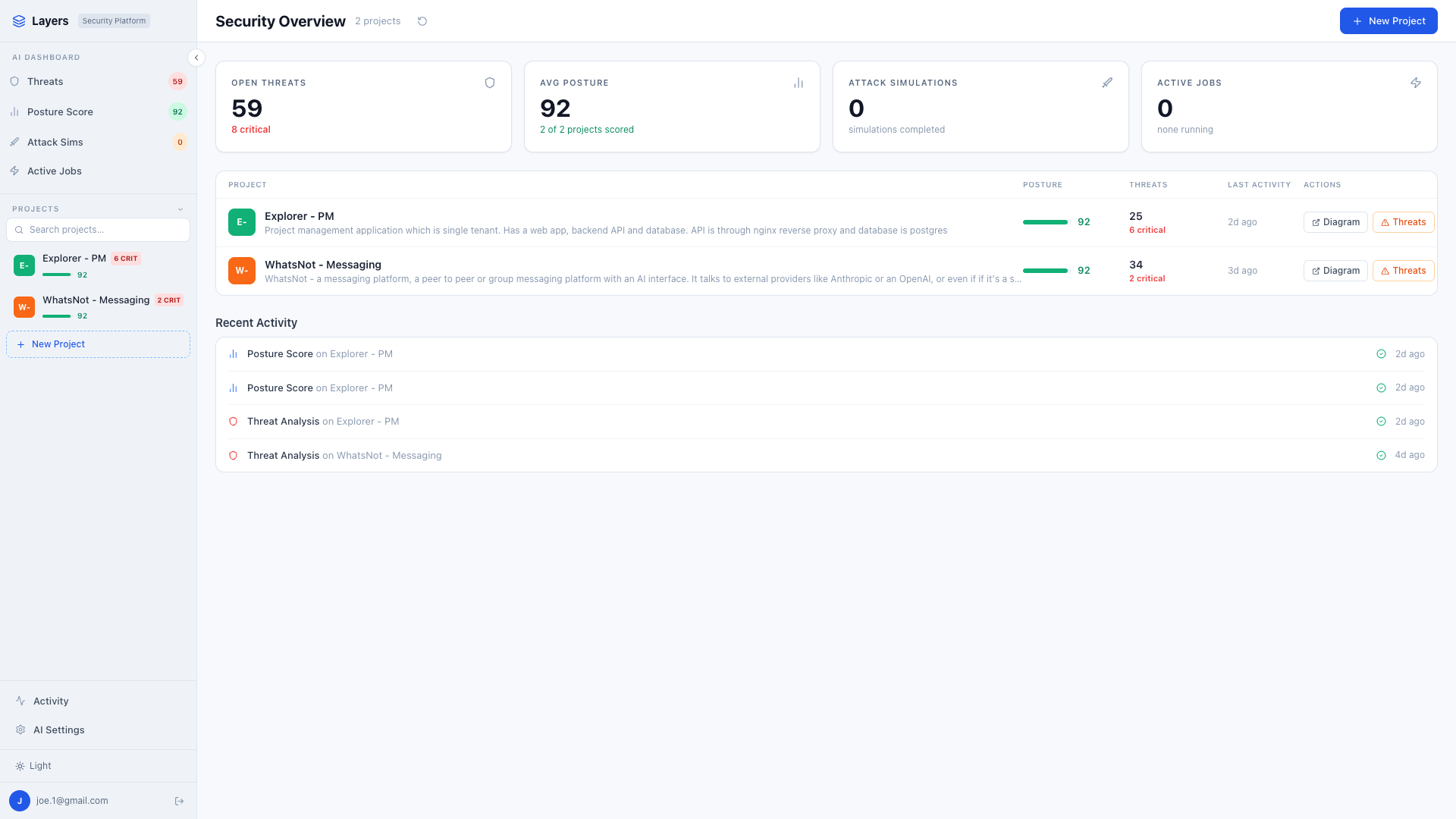
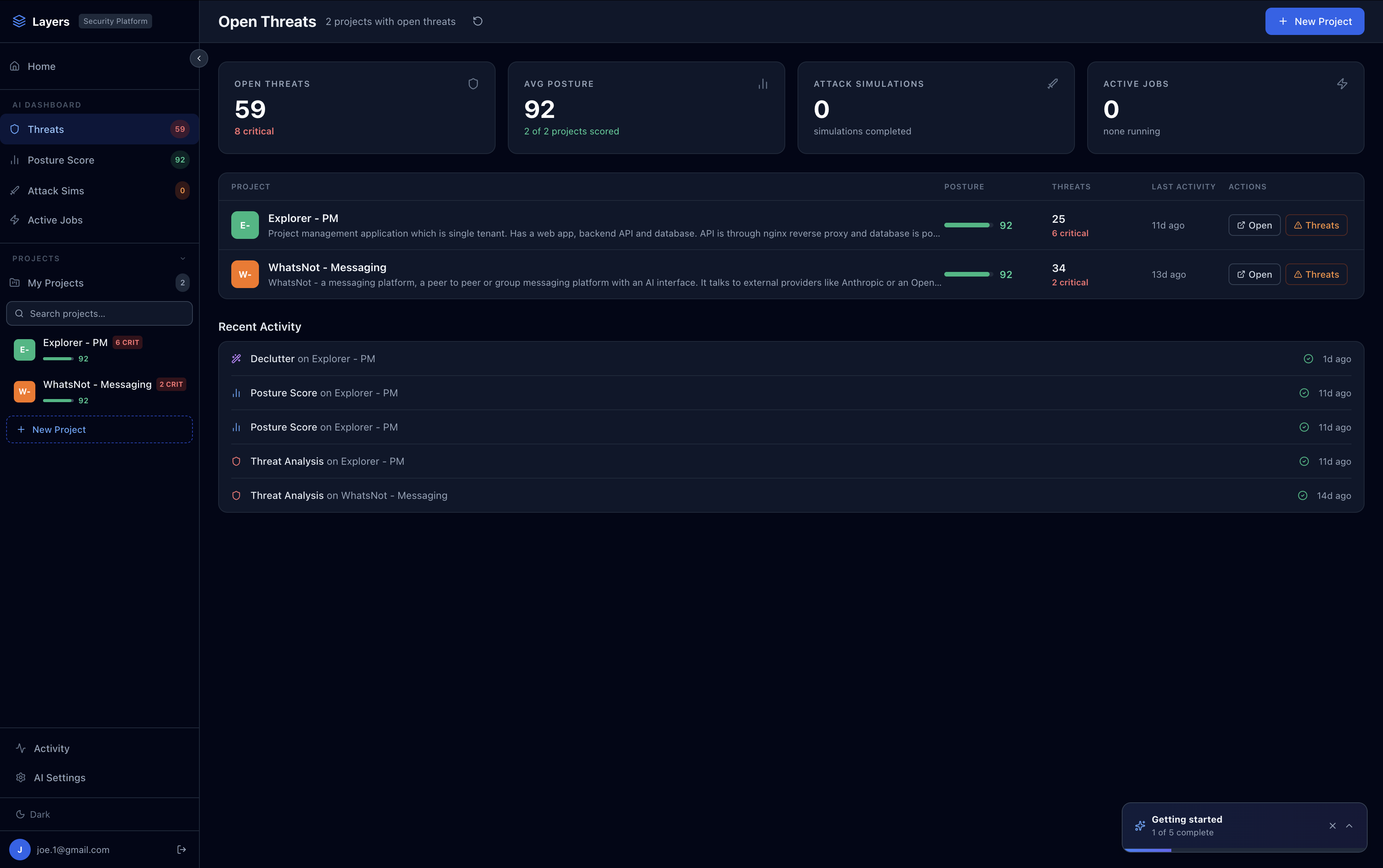
Your threat surface, before you ship
Most threat modeling happens after architecture decisions are locked in. By then, every finding is expensive rework. Layers brings threat analysis, posture scoring, and attack simulation to design time - where it's still cheap to fix.
For security engineers who want threat modeling at design time, not pentest time.
One continuous loop - design, analyze, simulate, evolve. Every step feeds the next.
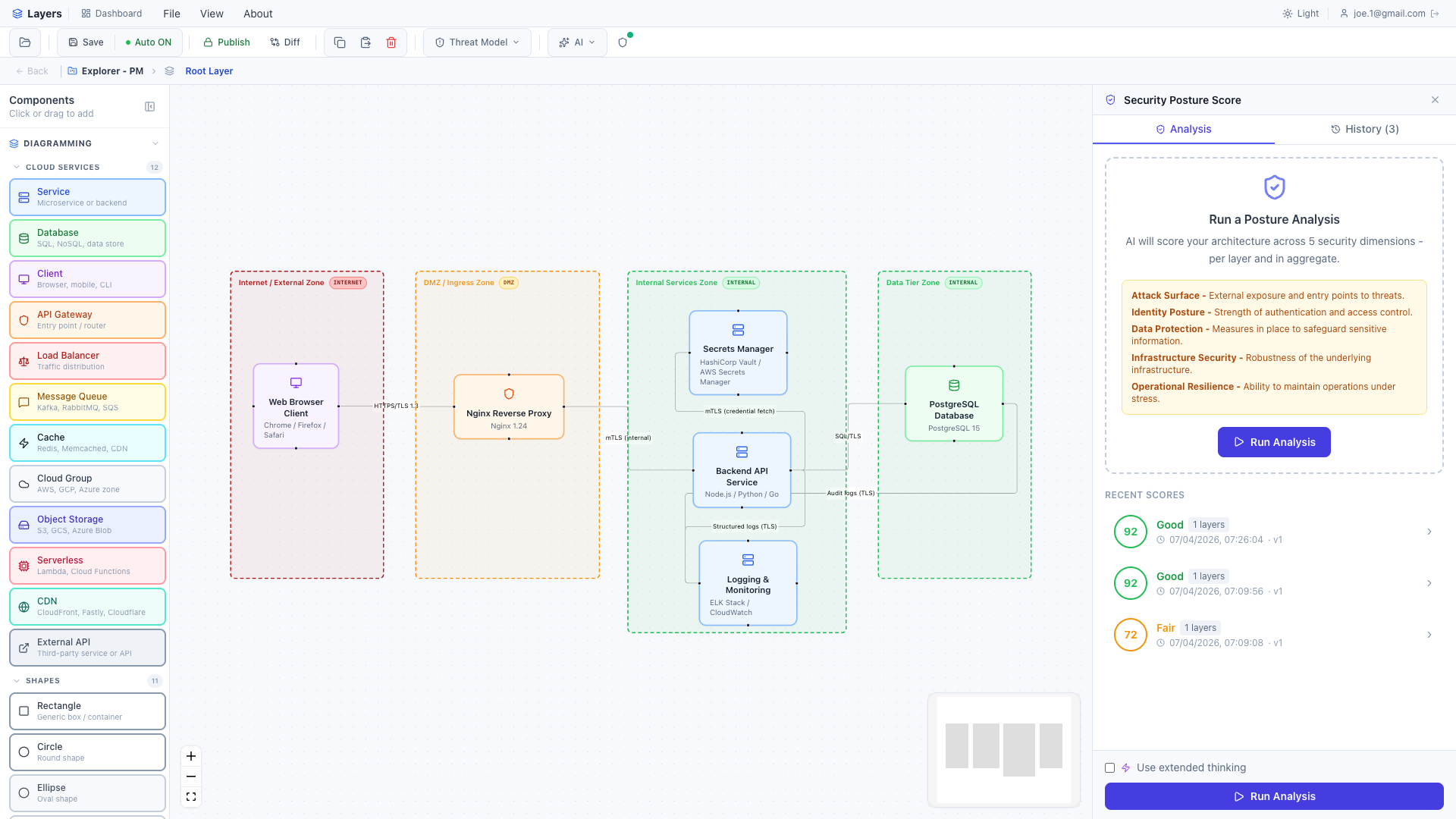
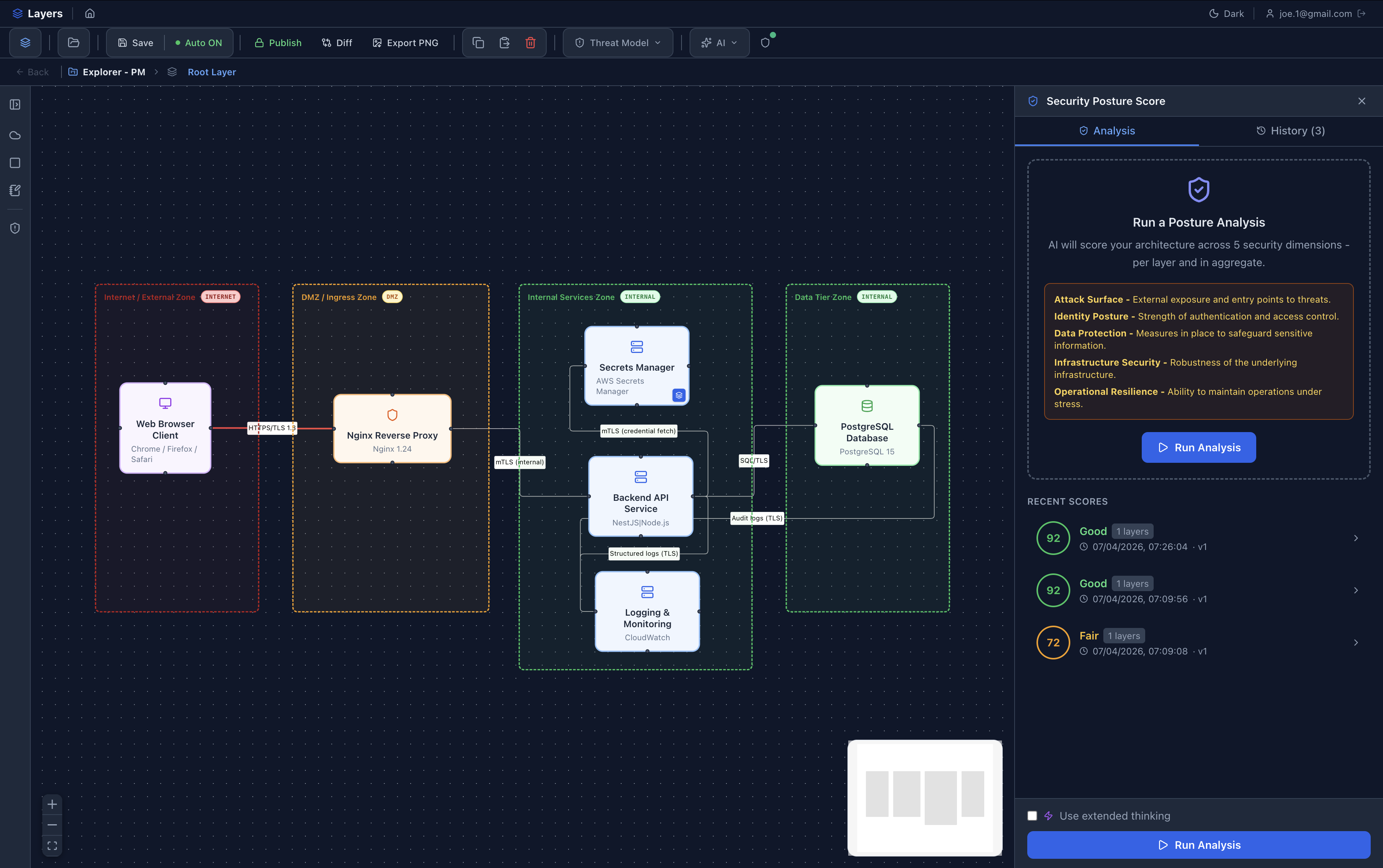
Describe your system in plain language or draw it manually on a visual canvas. Layers generates nodes, edges, trust boundaries, and layer structure using AI. Works for new systems or existing architectures you're documenting. Add trust boundaries, annotate nodes with technology labels, and let Layers figure out what kind of system you're building.
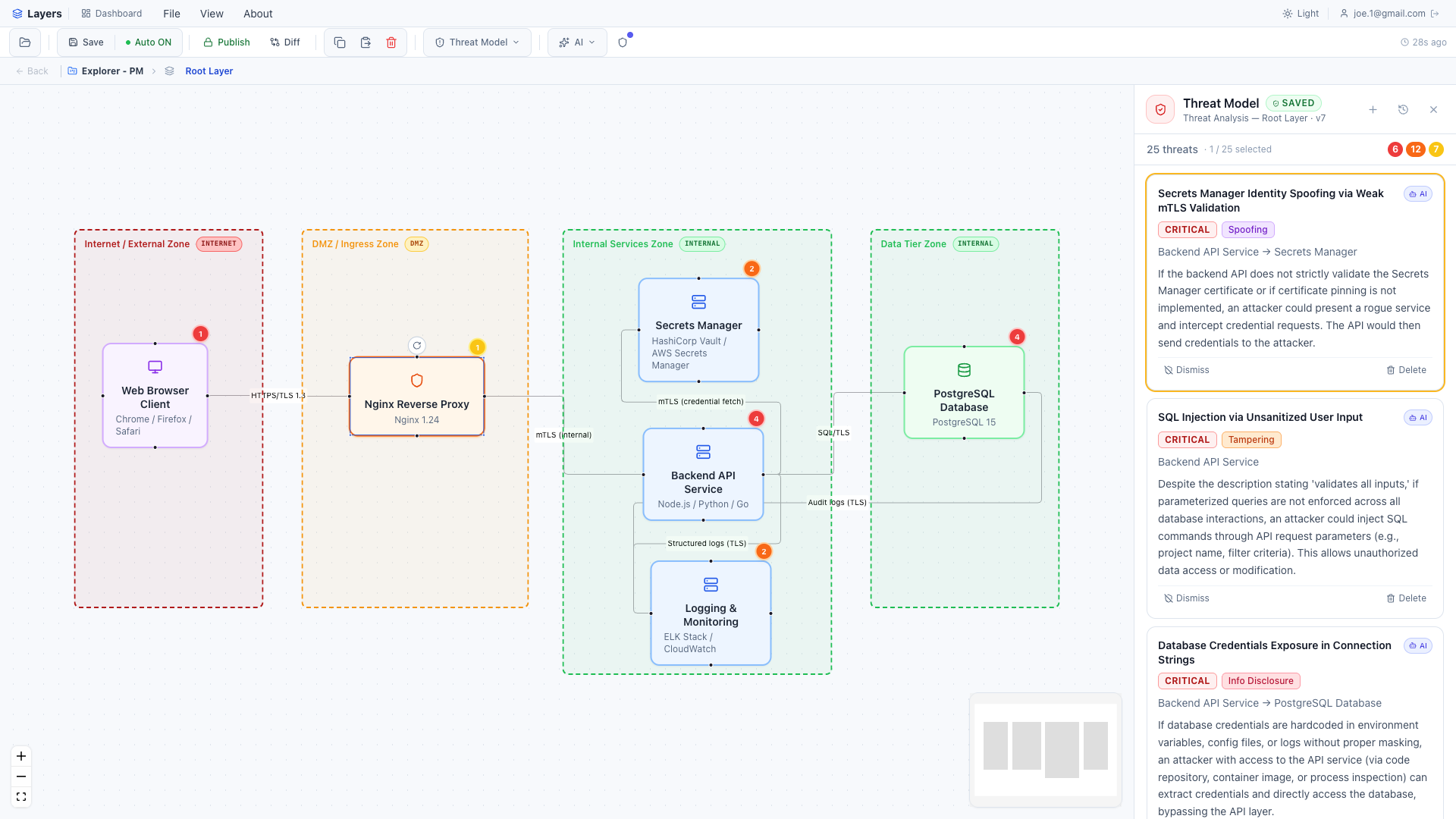
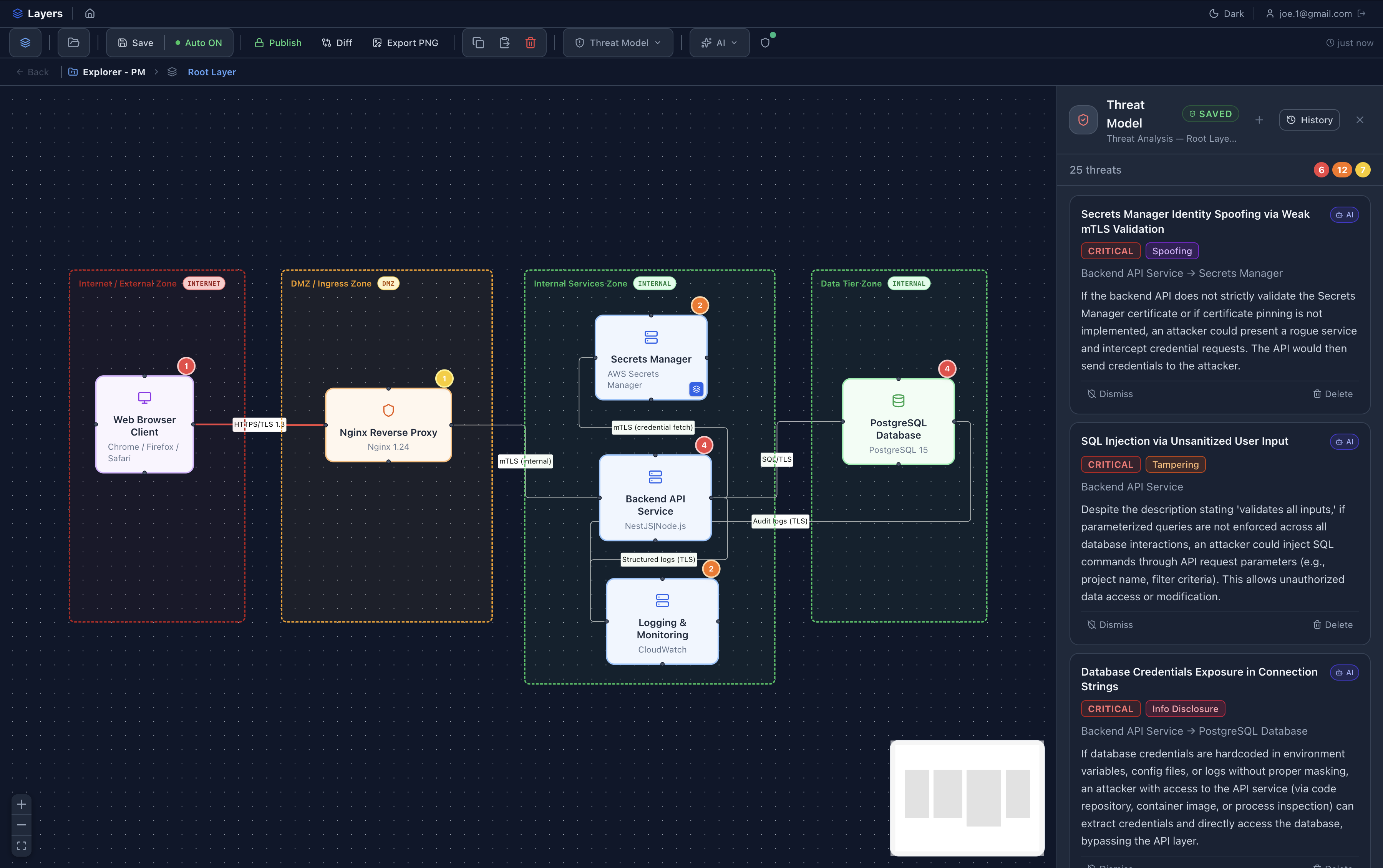
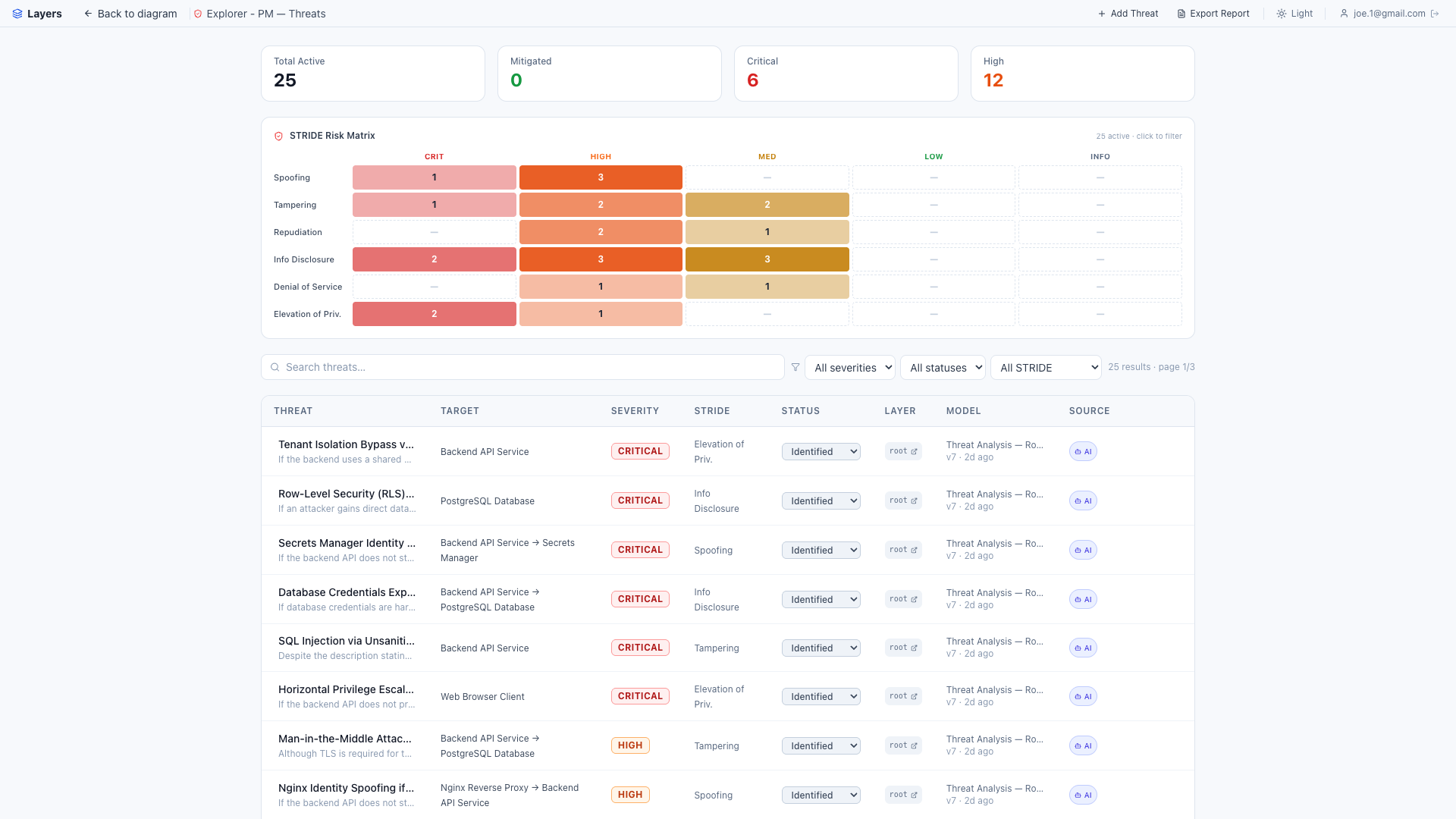
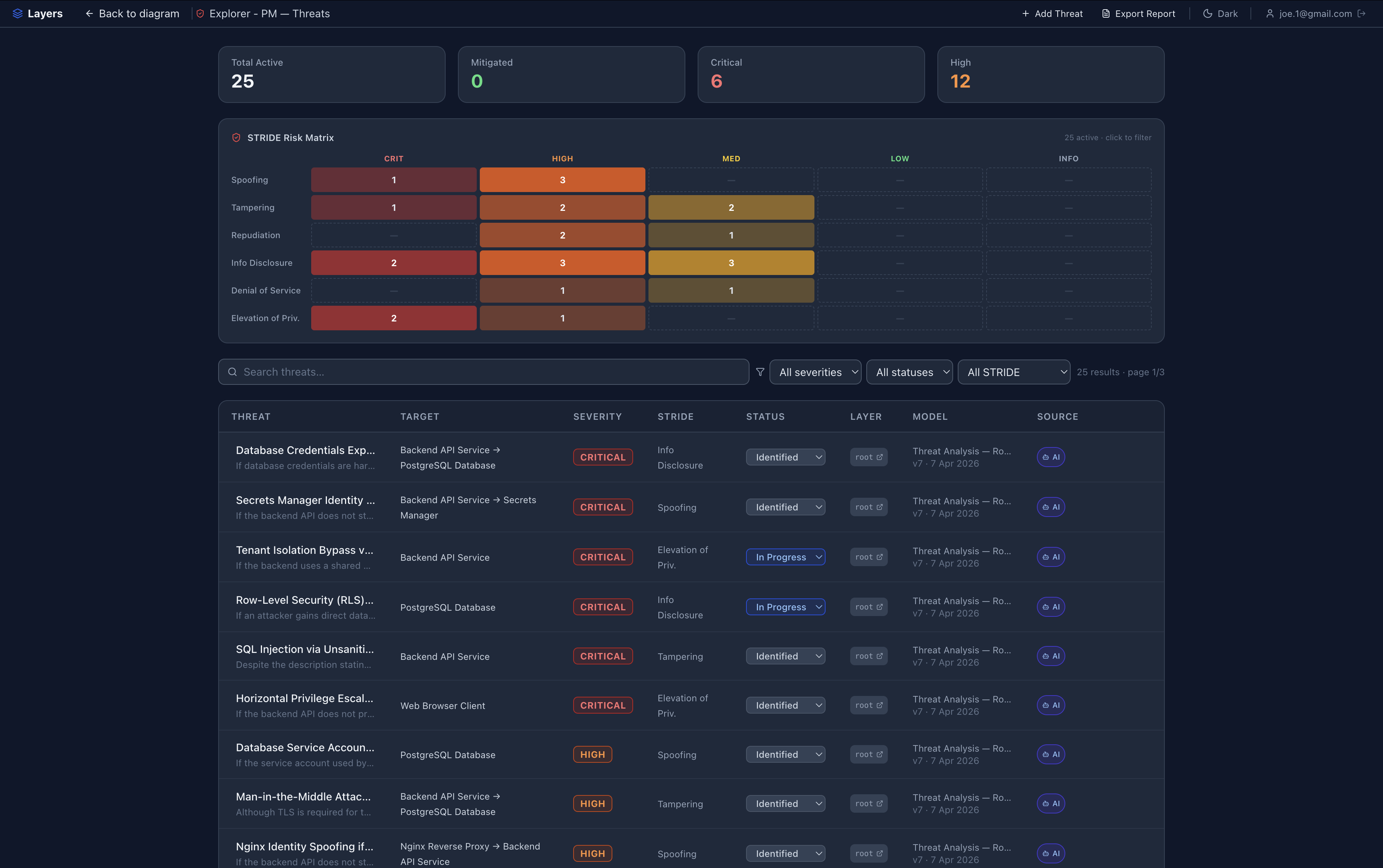
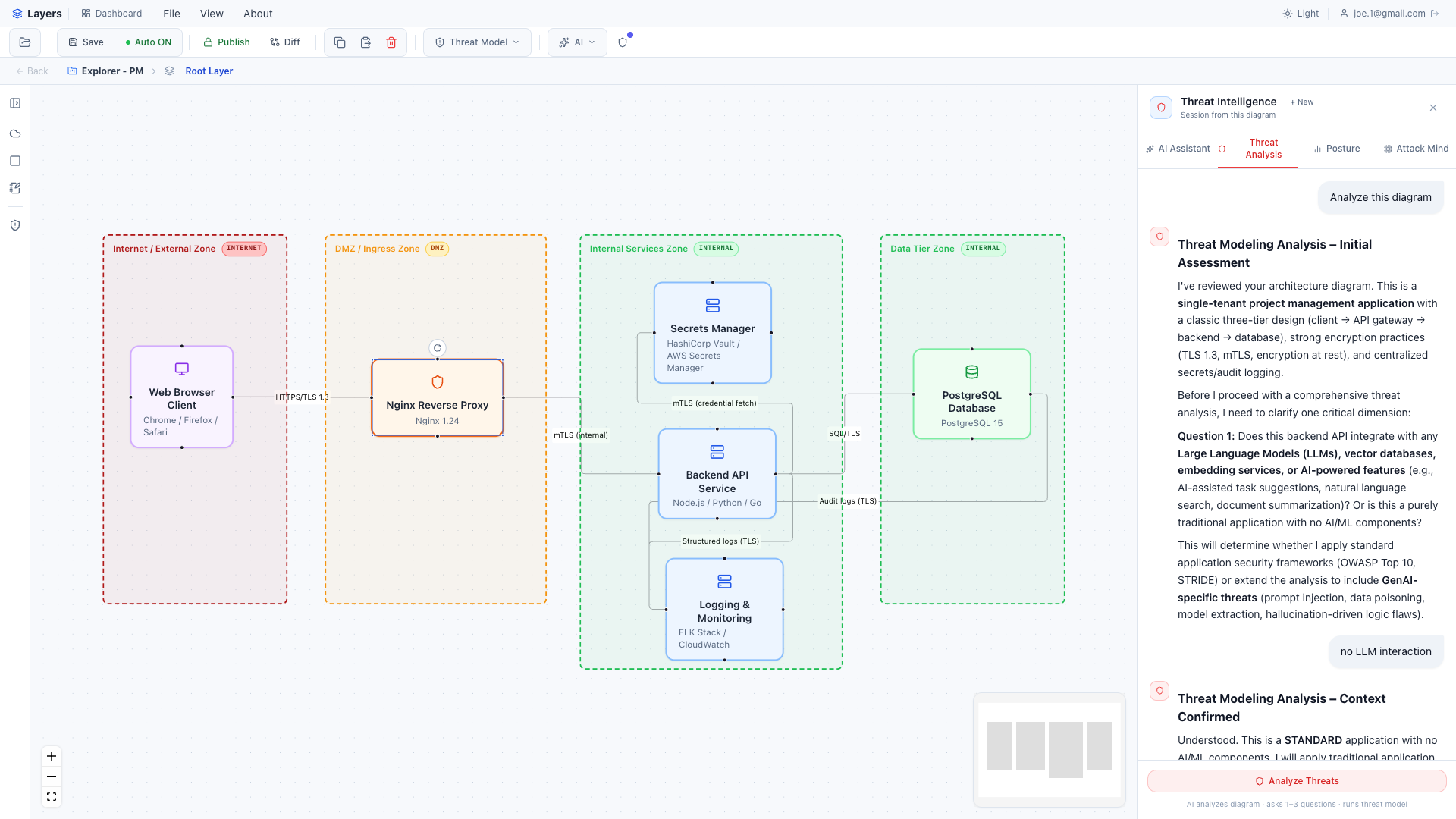
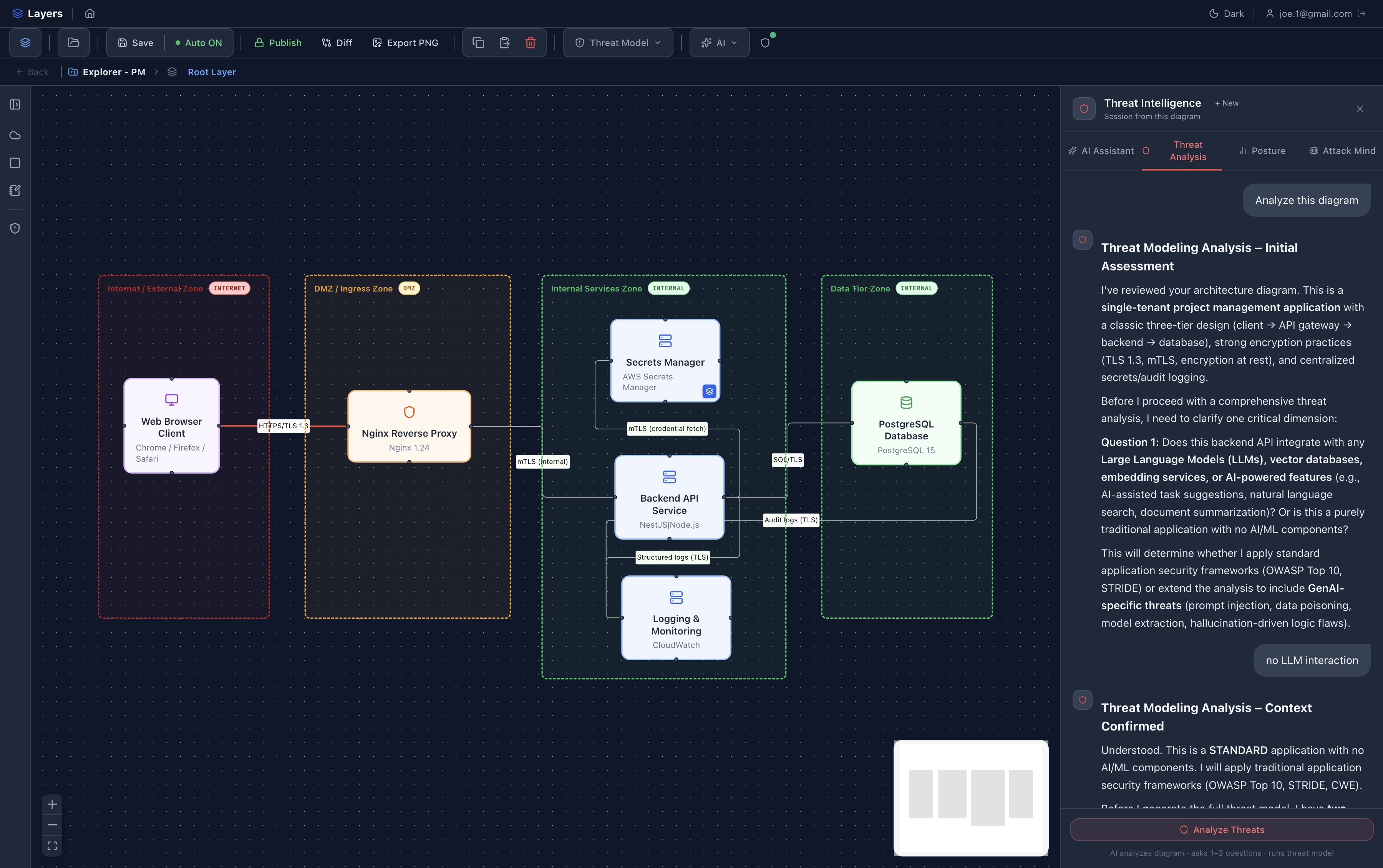
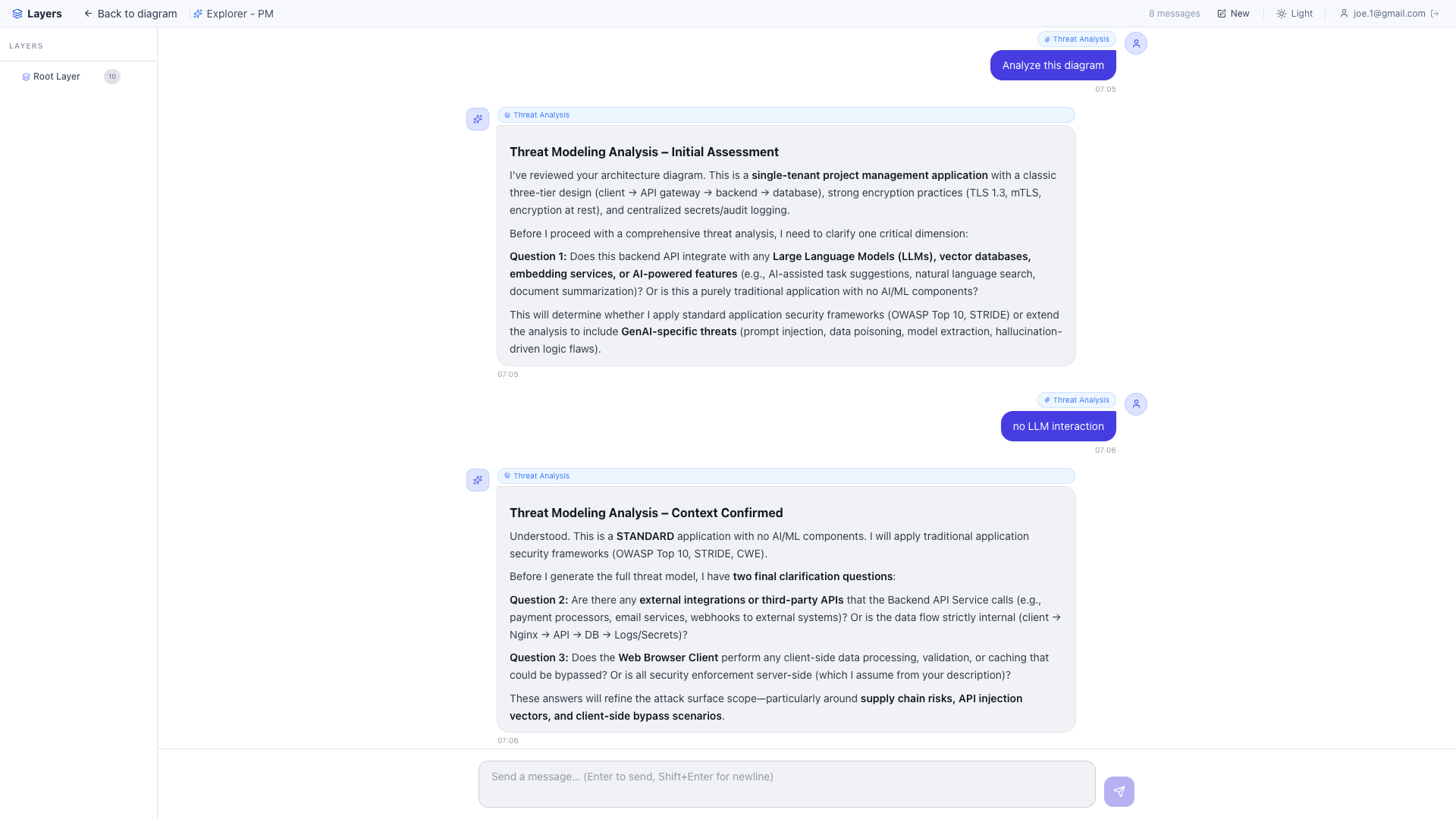
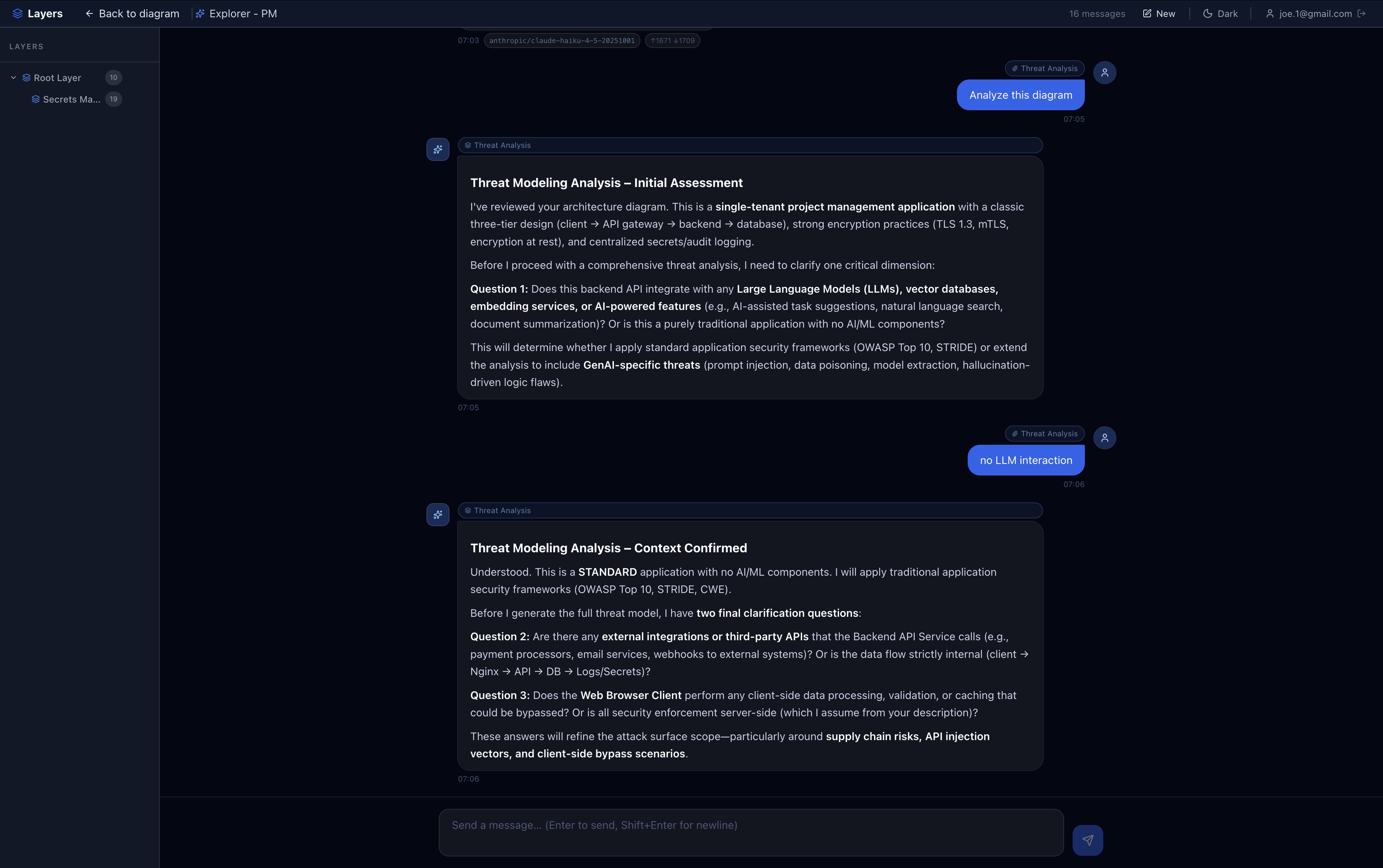
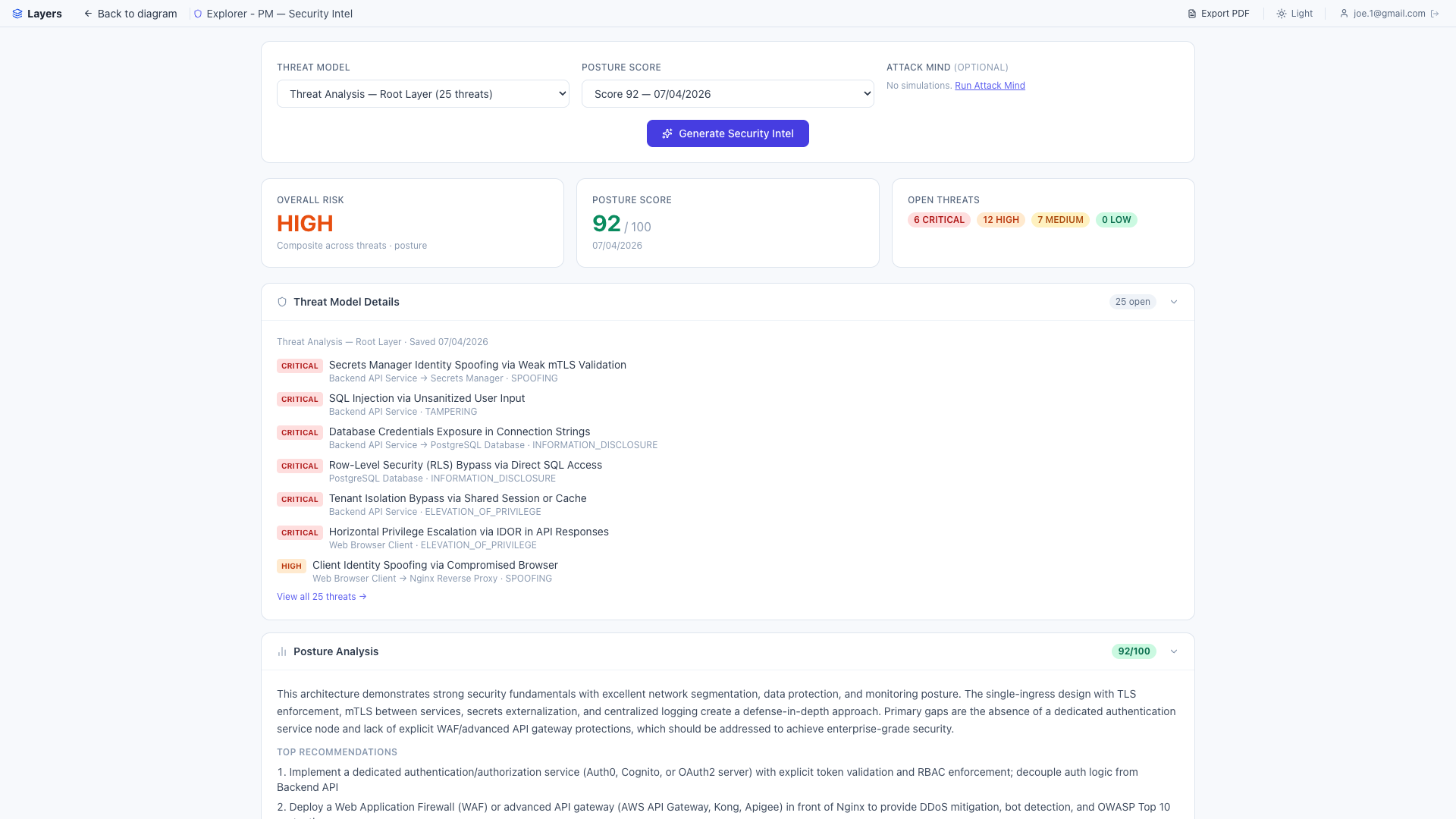
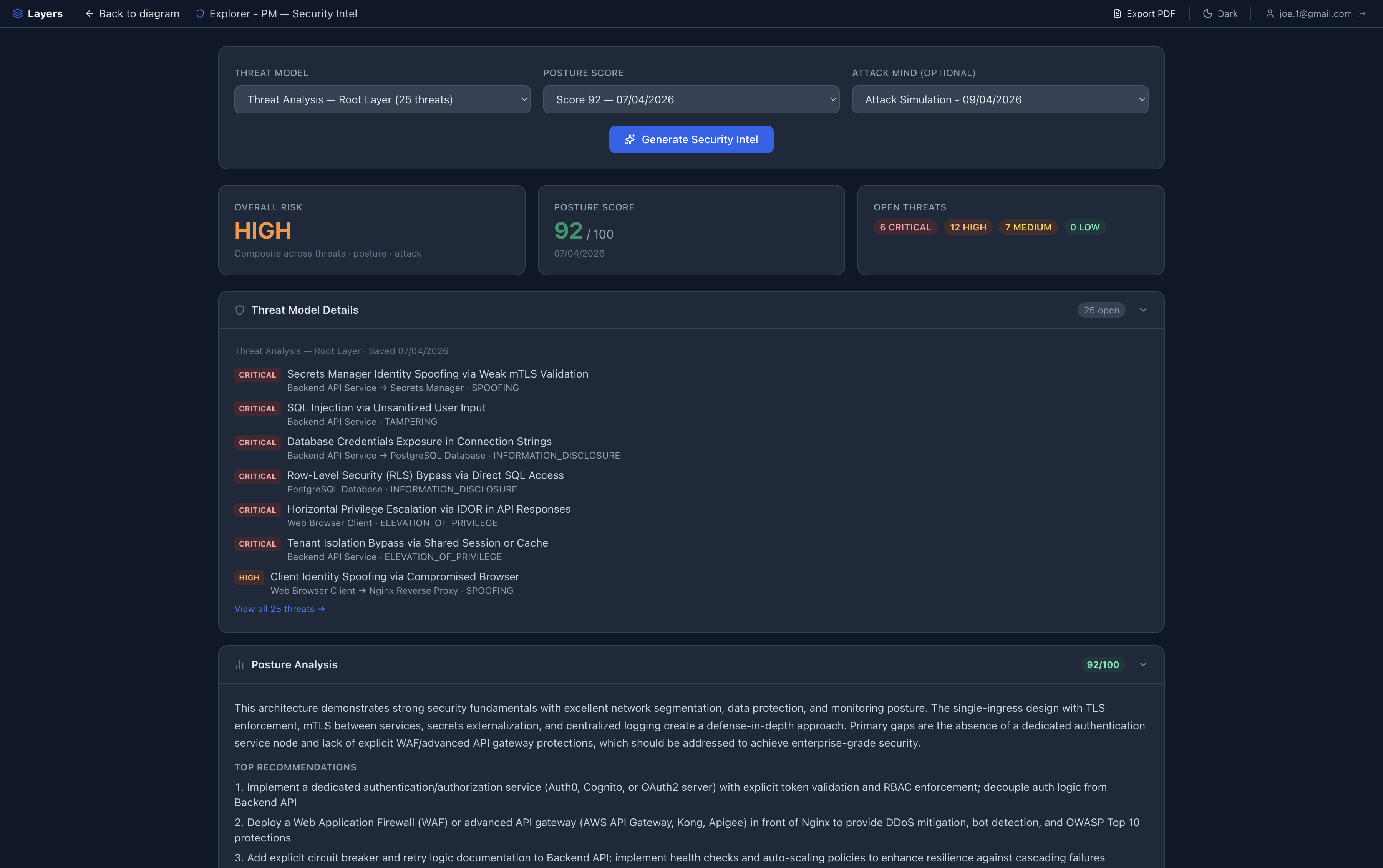
Layers reads every node and edge in your diagram and surfaces threats with severity, STRIDE category, and CISSP domain. It auto-detects whether you're building a web application, a GenAI pipeline, or an agentic AI system - and applies the right framework automatically. No manual configuration. Trust boundaries elevate severity when data flows cross zones without encryption or authentication.
A scored assessment across five dimensions - Identity & Access, Data Protection, Infrastructure Security, Operational Resilience, and Supply Chain. Every deduction comes with a reason and a recommended fix. Every score is saved against the architecture version, so you can track improvement over time rather than just a snapshot.
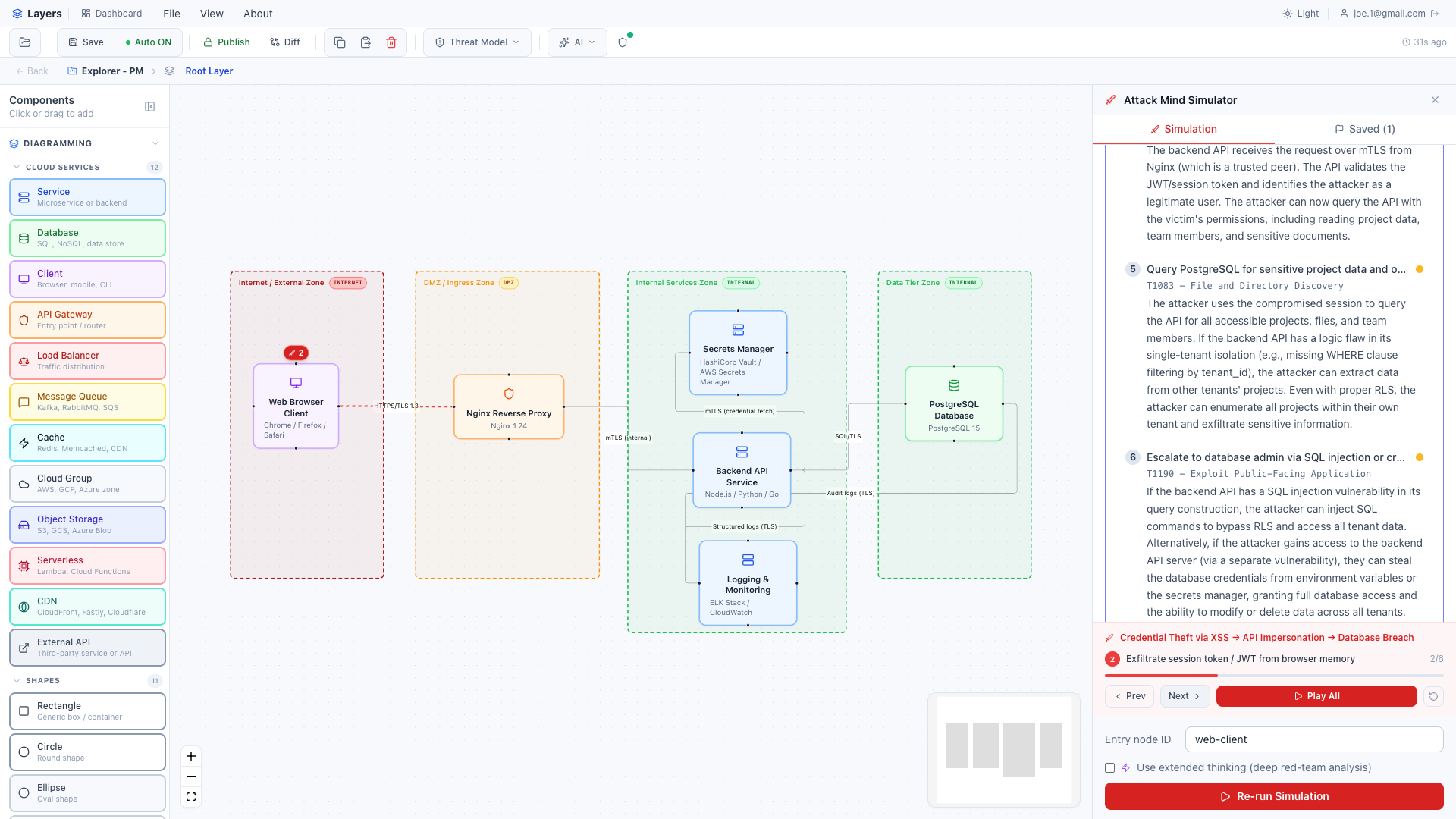
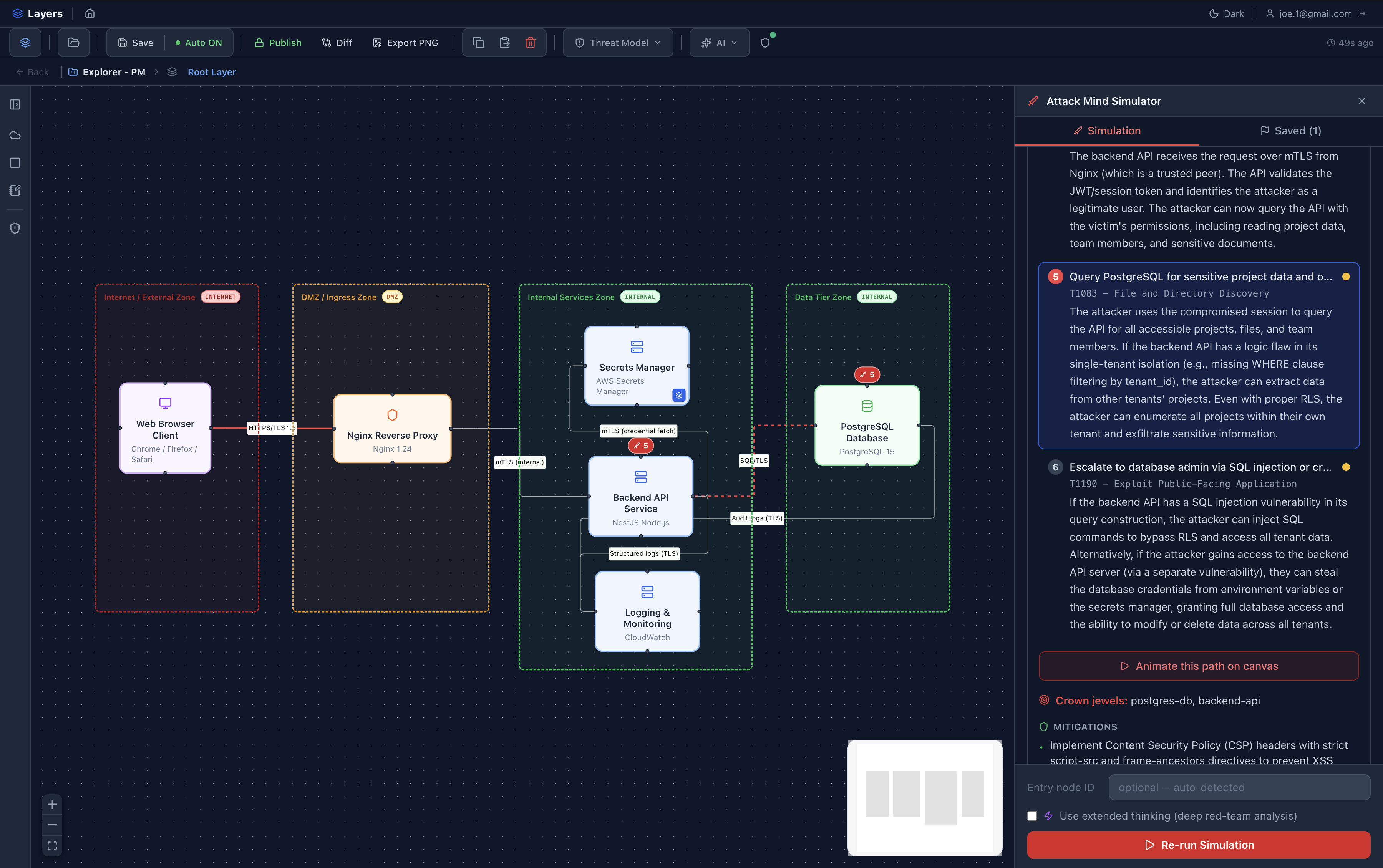
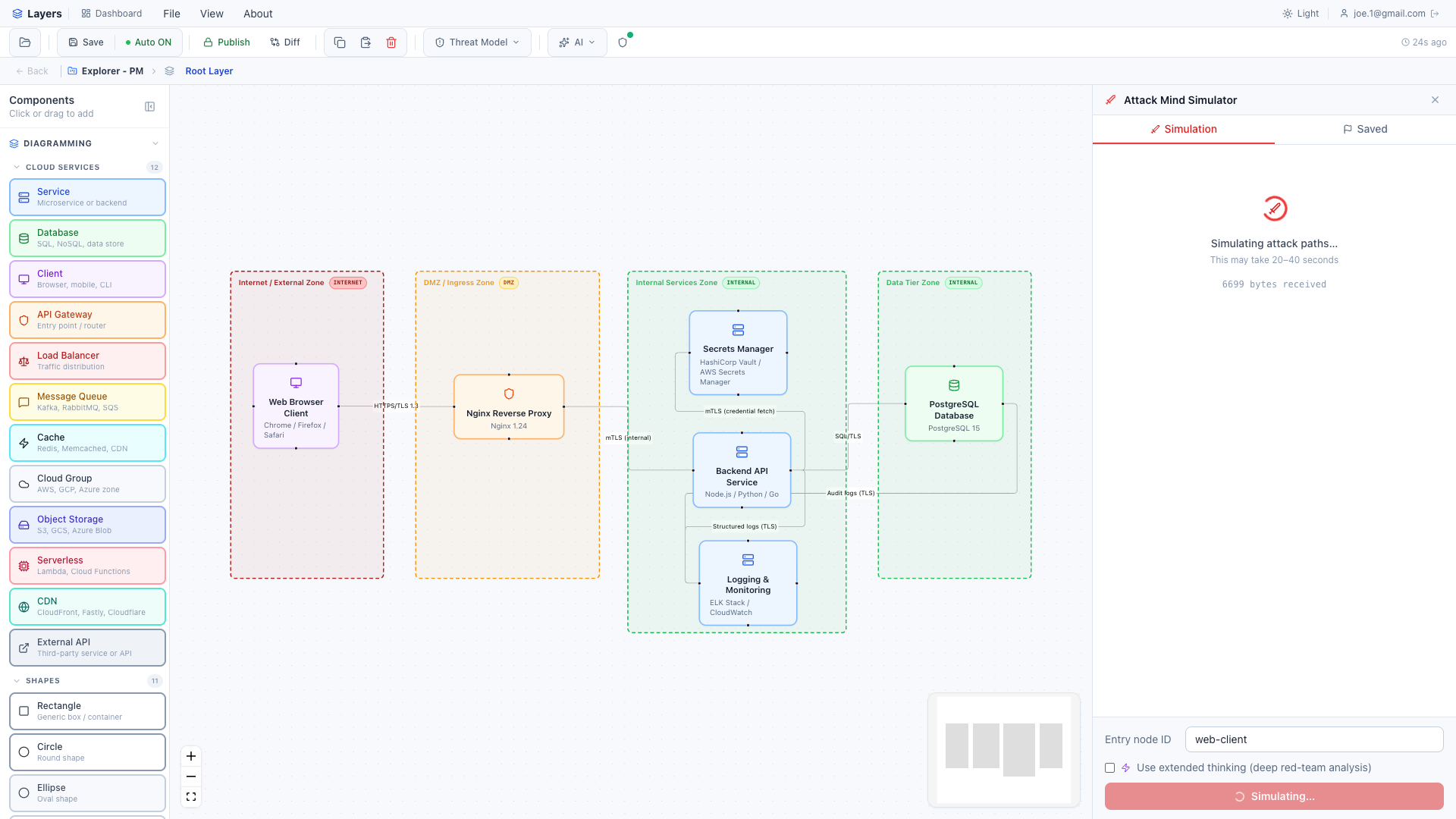
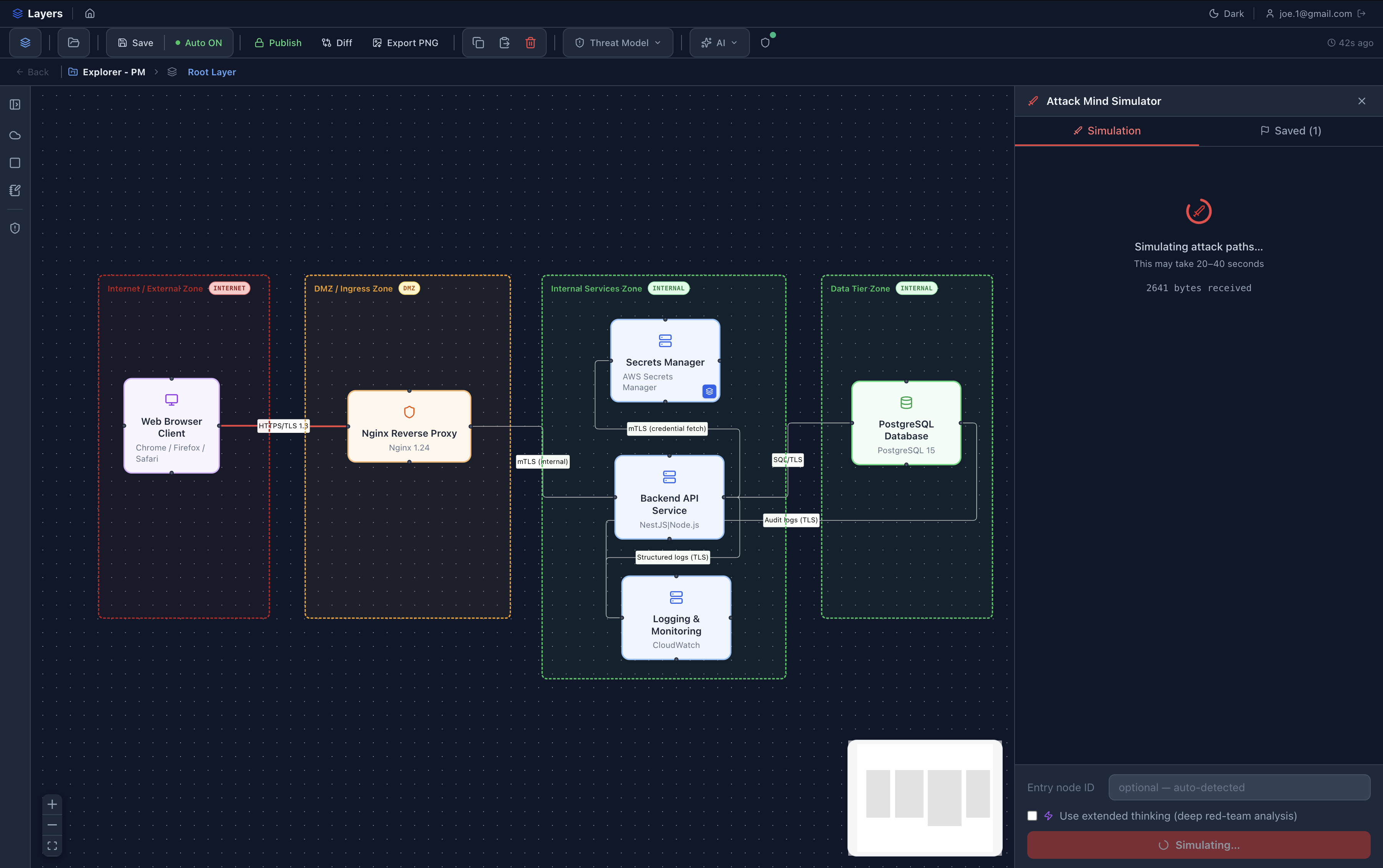
Specify entry points - public API, web frontend, third-party integrations - and Layers generates realistic multi-step attack paths from those entry nodes to your crown jewels. Traditional threat modeling tells you what could go wrong. Attack simulation tells you exactly how an attacker would get there - and what they'd exploit along the way.
Update your architecture based on findings. Publish a new version. Watch your posture score improve. Every version is a versioned snapshot - diff any two to see exactly what changed, what improved, and what regressed. Share the consolidated report with your engineering and DevSecOps team so findings become tickets, not PDFs that get ignored.
Not a whiteboard tool with threat labels bolted on. Every capability is designed around how security engineers actually think.
Real screenshots from the application. Dark mode supported throughout.
Every architecture version is an immutable snapshot. Diff any two versions visually - see exactly what changed, what improved, and what regressed. Audit-ready by default.
When a compliance review asks "what changed in the payment layer between Q1 and Q3?" - you have the answer in two clicks, not a three-day archaeology exercise.
Open source, self-hostable, AI-native. Built for security engineers who want threat intelligence at design time - not a pentest report six months after launch.